
Methane & Air Quality Intelligence
See the leak.
Prove the number.
Report with confidence.
AireChemistry detects, quantifies, and reports methane emissions across oil & gas, mining, and landfill sites through our Methane Event & Plume Intelligence (MEPI) engine, paired with ACADNet 72-hour air quality forecasting and SANAS-aligned third-party reporting.
Landfill methane is an invisible emergency
Methane is odourless at low concentration, migrates underground, and accumulates unpredictably — until it doesn't stay hidden. Independent satellite-derived observations already show repeated large methane releases at sites across South Africa. The question is no longer whether it's happening, but understanding when, why, and what to do about it.
Fatalities at the 2005 Payatas, Philippines landfill collapse and methane ignition.
The Robinson Deep landfill fire in Johannesburg brought weeks of toxic air and school closures.
kg CH₄/h — the highest single satellite-derived observation recorded at a South African landfill site.
One Platform, Full-Chain Emissions Intelligence
From plume detection to audit-ready reporting — instrumentation, analytics, and compliance in one place.
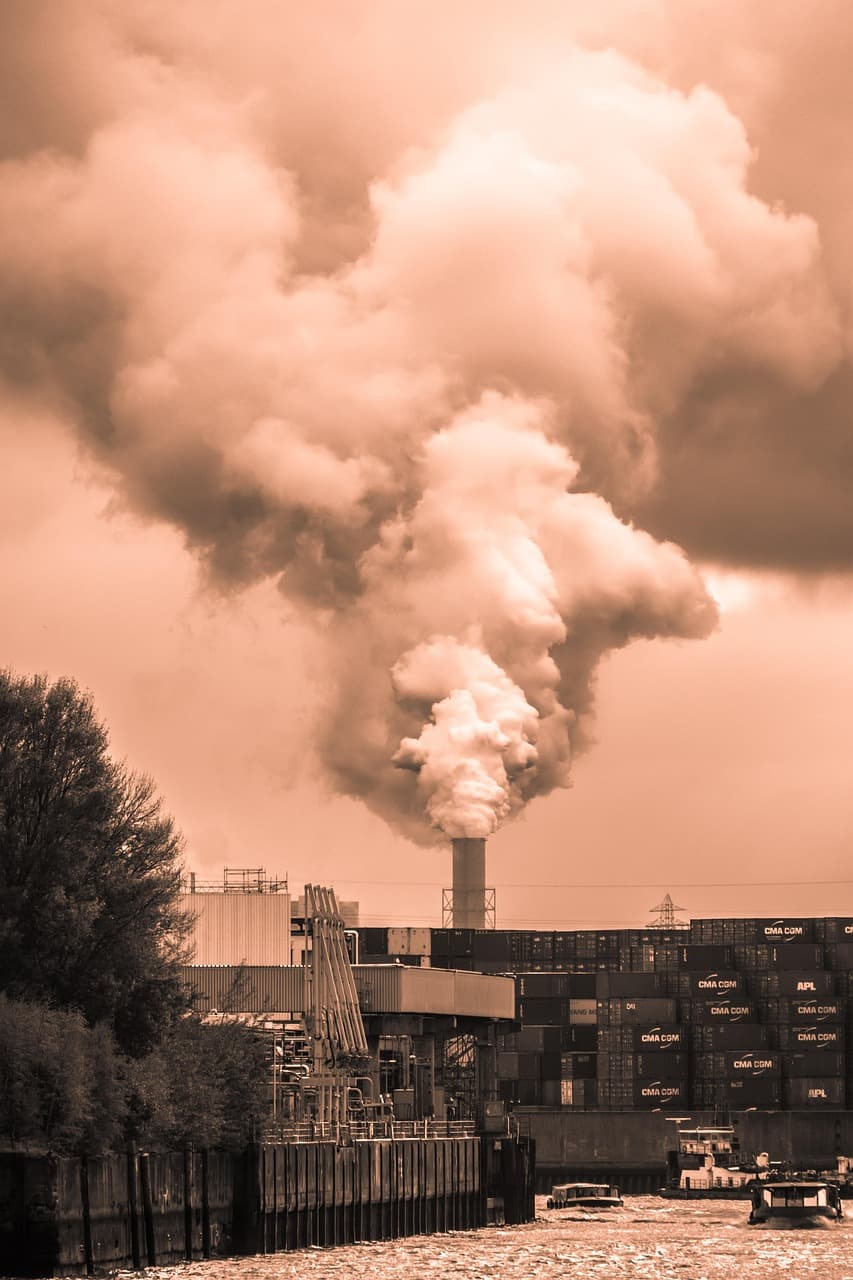
Methane Event & Plume Intelligence (MEPI)
Continuous detection, classification, and quantification of methane plumes and super-emitter events. Every event carries an evidence-based source attribution and an audit-ready confidence score — not a raw threshold trip.
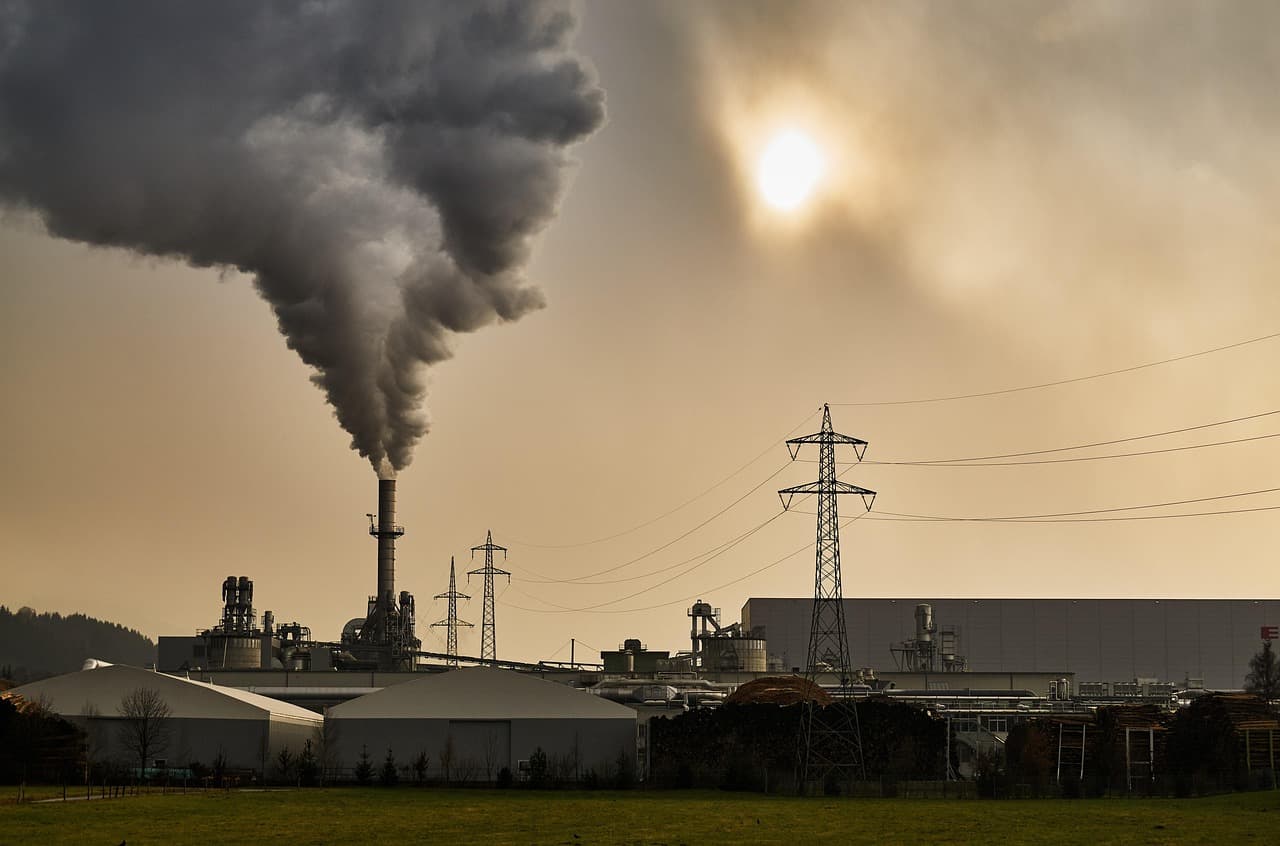
GHG & OGMP 2.0 Reporting
Measurement-based data packaged for OGMP 2.0 Level 4/5 submissions, EU Methane Regulation compliance, and ESG disclosures — audit-ready, not spreadsheet-built.

72-Hour ACADNet Air Quality Forecasting
ACADNet — our physics-informed spatiotemporal deep learning framework — fuses atmospheric transport, chemistry, emissions, meteorology, and terrain into a single graph-based forecast, continually retrained for real-time deployment.
Geographic & Dispersion Mapping
Interactive spatial visualization with wind-corrected heat maps and pollution dispersion modeling for site-level, regional, and facility-boundary air quality management.
Smart Multi-Modal Alerts
Actionability-driven alerts — never a fixed ppm threshold — via coughing-speaker technology, RGB strobes, and vibration, plus early-warning Telegram notification for high-priority events.
Third-Party Compliance Reporting
SANAS-aligned, ISO/IEC 17025-referenced independent audits and reporting for dustfall and ambient air quality — evidence your regulator and stakeholders can trust.
Methane, Air Quality & Compliance Services
Comprehensive environmental monitoring, forecasting, and reporting solutions
Continuous multi-pollutant measurement at ground level, 24/7.
MEPI interprets behavior against wind and site activity.
Evidence supports timely investigation and intervention.
Response is measured; sites suited to methane recovery are identified.
Methane Monitoring for Oil & Gas, Mining, and Landfill
Continuous, measurement-based detection and quantification of methane emissions across upstream, midstream, mining, and landfill sites — powering our Methane Event & Plume Intelligence (MEPI) engine and meeting the reporting bar set by OGMP 2.0 and the EU Methane Regulation.
Ideal Applications
Sensors, Data Loggers & Wind Sensors, Built for the Field
Own your data. Our solar-powered monitoring units combine methane and gas sensor arrays, wind sensors, and data loggers in a single field-ready enclosure.
Particulate Matter Sensors
The World Health Organization estimates that ambient air pollution, driven largely by fine particulate matter (PM2.5), contributes to millions of premature deaths every year worldwide, with cardiovascular and respiratory disease the leading causes. WHO's 2021 Global Air Quality Guidelines set an annual PM2.5 guideline of 5 micrograms per cubic meter, underscoring why continuous, site-level particulate monitoring matters for both compliance and public health.
World Health Organization, WHO Global Air Quality Guidelines (2021)Methane & Gas Sensor Array
A multi-sensor platform delivering 72-hour AI forecasts, instant public alerts, and comprehensive environmental monitoring for communities and industry, with methane carbon credit verification built in.
Wind Sensors & Data Loggers
The World Meteorological Organization's guidelines for surface meteorological observation set the accuracy and siting standards that underpin defensible plume-source attribution: representative wind speed and direction data, correctly sited and regularly calibrated, are the backbone of any dispersion or emission-quantification study. AireChemistry's meteorological sensors are specified to meet these operational standards.
World Meteorological Organization, Guide to Instruments and Methods of Observation (WMO-No. 8)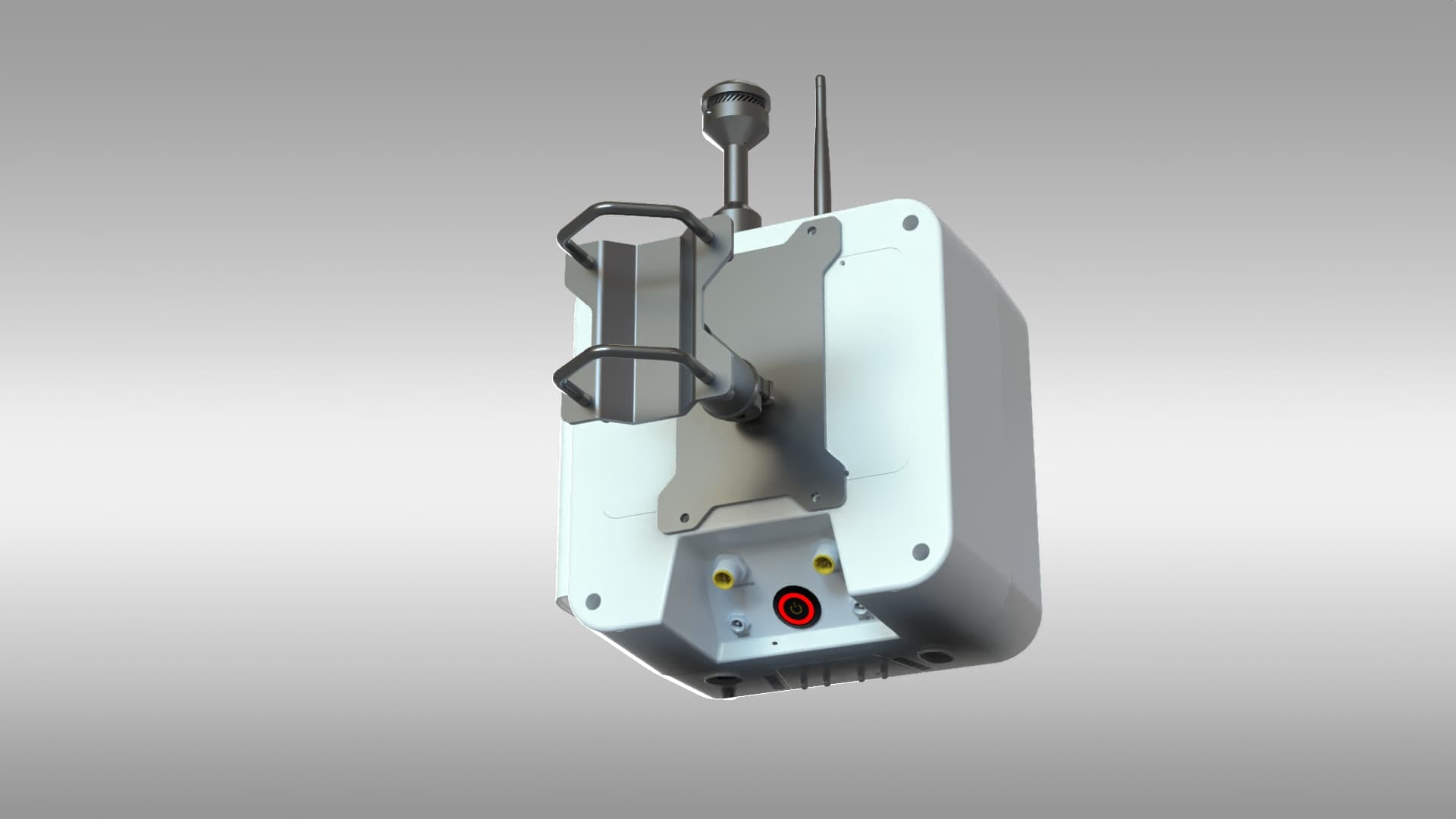
Acoustic & Noise Monitoring
Methane Plume Mapping (US EPA OTM-10)
For sites requiring a regulatory-grade emission rate rather than screening-level detection, AireChemistry deploys Vertical Radial Plume Mapping (VRPM) in accordance with US EPA Other Test Method 10 (OTM-10) — a path-integrated optical remote sensing methodology purpose-built for quantifying fugitive and area-source methane emission rates, cross-referenced against MEPI's continuous ground-sensor evidence.
US Environmental Protection Agency, Other Test Method 10 (OTM-10)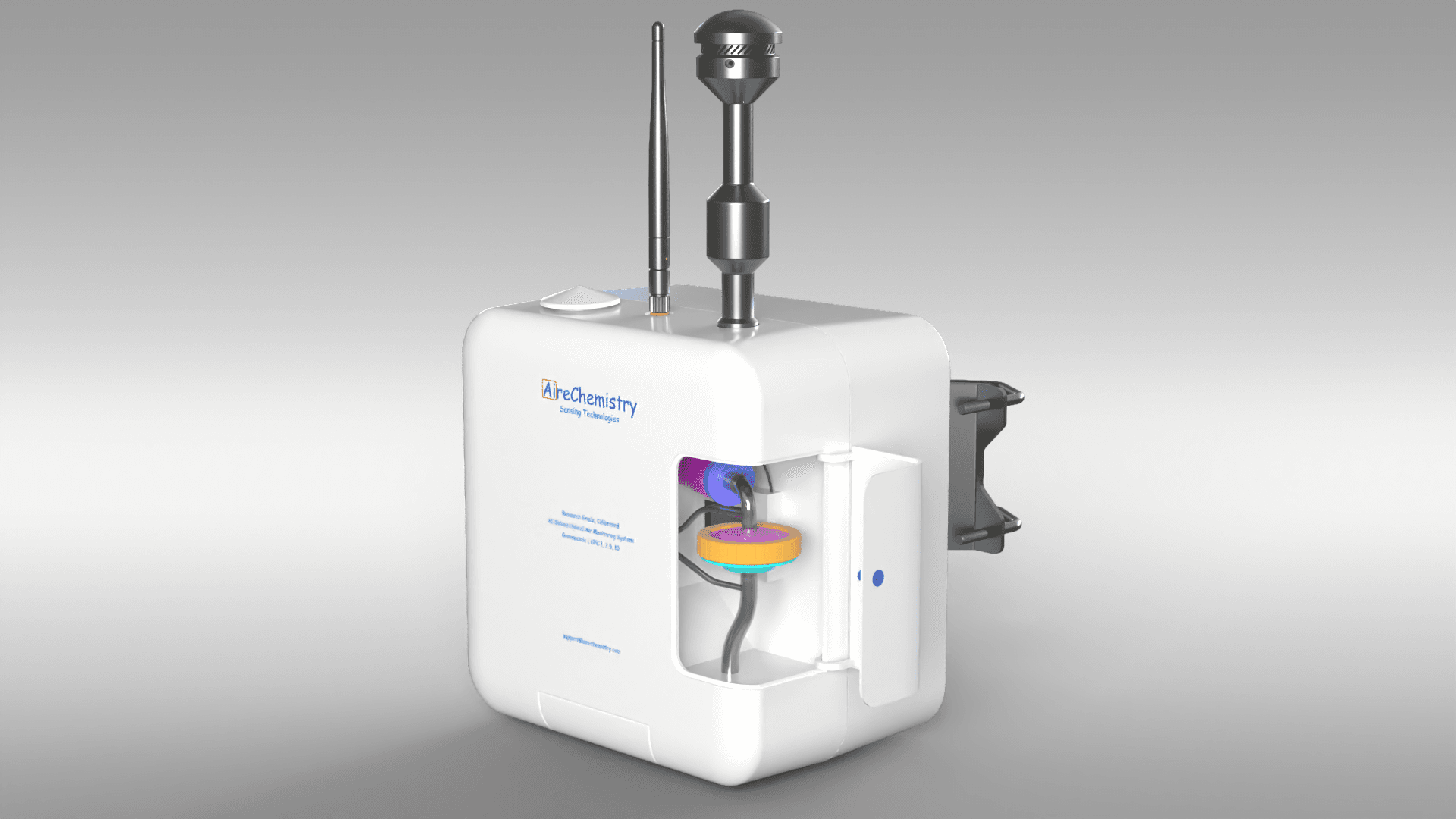
Power & Connectivity
Data & Analytics
Compliance & Third-Party Reporting
When your regulator, lender, or community needs evidence — not just a dashboard — we provide independent, accredited-aligned reporting.
SANAS-Aligned Third-Party Reporting
Independent dustfall and ambient air quality reporting aligned to SANAS accreditation requirements, giving regulators and communities data they can rely on without conflict of interest.
ISO 17025-Referenced Audits
Testing and reporting methodology referenced against ISO/IEC 17025, the international standard for the competence of testing and calibration laboratories.
OGMP 2.0 & EU Methane Regulation Support
Measurement-based methane data structured for OGMP 2.0 Level 4/5 reporting and emerging EU Methane Regulation obligations for importers and operators.
Carbon Tax Verification
Measurement-based emissions evidence structured to support carbon tax filings and third-party verification, aligned to national GHG reporting cycles and Tier 2 emission factor methodologies.
Data, Interpretation & Public Reporting Principles
AireChemistry data support decision-making and investigation. Where a regulatory determination is required, a regulatory-grade reporting tool can be deployed separately.
A single satellite observation is not automatically a persistent emission rate. Ground deployment exists precisely to establish continuity and context.
Interpretation considers concentration, duration, meteorology, co-pollutants, exposure pathways, and the relevant regulatory framework.
Reporting focuses on measured facts, trends, and significant events. Where an observation remains uncertain, that uncertainty is reported as such.
Make Your Products Perceive the Future
Global weather, air quality, and methane/GHG reporting data — integrated straight into your systems.
ACADNet
ACADNet (AireChemistry Atmospheric Dynamics Network) is a physics-informed spatiotemporal deep learning framework for operational multi-pollutant air quality forecasting. The framework integrates atmospheric transport, chemical dynamics, emissions, meteorological forcing, terrain information, and graph-based spatial learning into a unified forecasting architecture designed for continual learning and real-time deployment.
Methane & GHG Reporting API
OGMP 2.0-ready emissions data on demand
- Programmatic access to plume and quantification events
- Structured exports for OGMP 2.0 and ESG reporting
- Historical emissions trend queries
Global Weather Data
2 ways to call data: by city, or by longitude & latitude
- Worldwide coverage with precise location targeting
- RESTful API with JSON response format
- High availability and low latency
Air Quality Data
2 kinds of air quality data: Health Indices and Risk Alerts
- Real-time particulate matter measurements
- Air Quality Index calculations
- Health-based categorization
Extended Weather Forecast
7-day weather forecast
- Long-range planning capabilities
- Daily and hourly granularity
- Confidence intervals included
Real-Time Updates
Updates every 30 seconds
- Ultra-fresh weather observations
- Rapid response to changing conditions
- Critical for emergency applications
ACADNet Forecasting API
Physics-informed spatiotemporal forecasting, hour-by-hour for 72 hours
- Atmospheric transport, chemistry & terrain fused in one model
- Graph-based spatial learning, continually retrained
- Real-time deployment for pollution early warning
Weather Data Types
6 kinds of weather data
- Temperature
- Humidity
- Wind Speed
- Wind Direction
- Cloud Cover
- Rainfall
Lifestyle Index Data
5 kinds of lifestyle index
- Jogging / Running
- Patient Care (e.g., Elderly, Asthma)
- Physical Education / Sports
- Cycling
- Dog Walking
ESG Reporting
ESG reporting through
- Climate Risk Management
- Emissions Management
- Operational Efficiency
- Social Responsibility
Elite Scientific & Engineering Credentials
Driving environmental innovation across energy, mining, and municipal sectors
Lotta Mayana
CTO and Executive Director
Our leadership boasts over 25 years of combined expertise in:
- Engineering: Systems design, embedded hardware, and environmental technology development.
- Science: Atmospheric research and monitoring, with team roles at NASA JPL and ASTM International.
- Industry: 15+ years of experience from Chevron, Phillips 66, PBF Energy, and Bazan specializing in real-world environmental and energy systems.
Professional Credentials & Partnerships
NASA JPL
Active Science Team Members
ASTM International
Standards Development
SANAS & SABS
Accreditation & Standards
WITS & UNISA Partnership
Research Collaboration
DSTI
Science and Innovation Partnership
Ready to Measure, Not Estimate?
Join operators across the Globe who trust AireChemistry for accurate, defensible methane and air quality monitoring.
Ready to Transform Your Emissions Monitoring?
Connect with our team to discuss your methane, air quality, or compliance reporting requirements — and see how AireChemistry can provide measurement-based intelligence for your operation.